| The CRYPT Mag |
By Liz Green
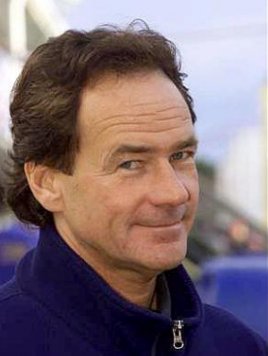
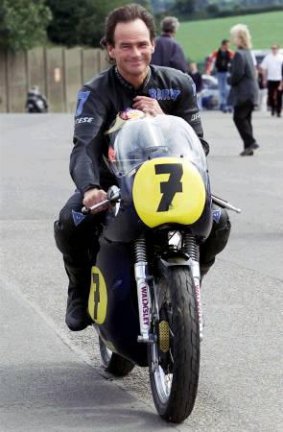
Barry was born on 11th September 1950, in London. His father, Frank, was an ex-racer and Grand Prix mechanic who subsequently passed all his enthusiasm to his son.Barry was riding motorcycles from the age of 5, a Bultaco 50cc and loved all things mechanical.
A tale that circulates regarding Barry at the age of 10, who had accompanied his father when he was an engineer at the Royal College of Surgeons in London, shows this. Young Barry was parking the Jaguars and Rolls-Royces of the eminent consultants. He remembers one old killjoy who wouldn't let a mere kid near his expensive machine who then proceeded to tear off its wing mirror himself.
"Sir Somebody-or-other walked up to him and said, 'That kid's been parking my car for years,' " Sheene grinned. Bulldozing portentousness has been the sub-plot of his life.
His father had been ace mechanic for years at a garage in London's Grays Inn Road and weekends off they went racing, for what Frank couldn't do with a spanner wasn't worth twisting. His asthmatic little son grew up to be a handy mechanic as well and, having left school at 15, he was still an apprentice delivery boy for the big store Bourne & Hollingsworth when Dad first tinkered up a bike for him in a junior race at Brands Hatch, in 1968, aged 18, riding a 125cc Bultaco, although he crashed out after suffering from a seized engine but gained his first win a month later, equaling the lap record. As a result of his father's links with the Bultaco factory, he was fortunate enough to get a works ride the following season.
Sheene purchased Stuart Graham's ex-factory Suzuki 125 cc twin and almost got the 125 cc world title, failing at the final round in Spain being beaten by Angel Nieto. Two years later won his first major honour, the 1970 British 750cc title.
In 1972 he switched to Yamaha, without success, but finally his luck changed when he eventually signed with Suzuki as an official rider. In 1975 he had his first win with 500 cc at Assen, beating Giacomo Augustini at the last corner. Later that year, Sheene suffered an horrific 176 mph accident at Daytona in March while riding a three-cylinder Suzuki, on a banked curve and his body was catapulted into a 200-yard skid which shattered his thigh, forearm, both wrists, collarbones and six ribs. He claimed he had left enough skin on the track "to cover a ruddy sofa". He came around three days later and, with a grin apparently, asked the surgeon for a cigarette - he was smoking easily 50 a day.
Barry’s favourite story from that time is of being interviewed by a properly spoken BBC reporter who asked him what was going through his mind at the moment of impact. "Your arse, if you're going fast enough," quipped Sheene delightedly into the microphone, with his usual irresistible cheekiness.
His wife, Stephanie, a former model, met him when he was on crutches in 1975. She was with her first husband at the time, ironically a huge Sheene fan. "He wasn't too impressed, actually," she said. He made an amazingly speedy recovery and raced again 5 weeks later!
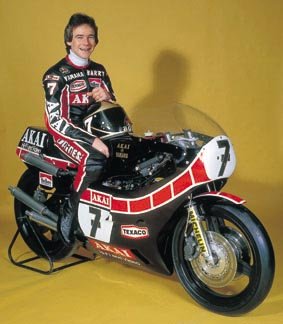
In 1976 on a works Suzuki RG500, he won five out of ten rounds to take the 500cc World Championship title, which was an astonishing feat, as he did not finish four rounds and was only a runner-up in another. The following year he retained the title by winning six rounds out of nine, and his great rivalry with American Kenny Roberts helped draw a huge new audience to the sport.
Barry Sheene didn't merely make motorcycle racing popular, he brought the figure of the Grand Prix Motorcycle Racer fully into the spotlight of popular culture in a way that no rider has, before or since his spectacular rise to fame. Sheene changed motorcycle racing for the better, increasing awareness of the sport a hundred fold in the UK with his brash talk, hard riding and ability to land big name sponsors to back his efforts. He had talent, charm, an easy smile and played to the crowds pulling wheelies at race finishes, one of the first racers to do so. Grand Prix fans and the British public loved him.
In a sport where parents tell their teenage son they “can't have a bloody motor-bike”, Barry Sheene was a bit of a nightmare. For not only did going fast on a Suzuki mean he made quite a bit of money, he also pulled quite a few glamorous girls, and, like his contemporary James Hunt, the Formula One Grand Prix driver, he also attracted headlines for his irreverent playboy lifestyle. In his prime, Sheene lived the wild, rock star life one might expect of a handsome 70s racing superstar. As chronicled in several of his books, Sheene loved women, loved racing and loved to involve himself in both as often as possible. He was overflowing with smutty stories from the 1970s and 1980s, none of which could be repeated in these politically correct times. Young lads during that time wished to emulate their hero and live his life-style.
Sheene was also known for his forthright, honest and brash opinions, sardonic wit and undying confidence in himself.
As Double World Motorcycling Champion, Barry Sheene made headlines both on and off the track and attracted a whole new audience to the sport during his 1970s heyday.
But controversy and disaster were never far away, with Sheene's playboy lifestyle and injuries sustained in several high-speed crashes occupying the front and back pages of the newspapers.
Between 1975 and 1982, Sheene won more international 500ccand 750cc Grand Prix races than any other rider, and he was awarded the MBE in 1978. To add to his two world championships, Sheene also won two prestigious Seagrove Memorial trophies.
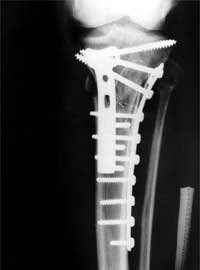
In 1982, he smashed into a bike lying across the Silverstone track during a British Grand Prix practice. Surgeons rebuilt his shattered legs using metal plates and screws. At one point in his career, Sheene was racing with metal plates in both knees, 28 screws in his legs and a bolt in his left wrist. "The Silverstone crash was different," he said. "That was major - I could have ended up legless. My left leg was hanging on by the femoral artery."
From then on, Sheene struggled to find a bike capable of matching his talents and eventually announced his retirement in 1985. The pain caused by arthritis brought about by broken bones, made worse by Britain's cold climate, prompted him to move to Australia’s Gold Coast in 1987.
Barry made a new career for himself in Australia, becoming a television presenter reporting motor sport races there with a unique style of his own. Outspoken and earthly honest, his reporting left no doubt in viewers minds where his money lay, or his opinions on the rider’s ability - or lack of it.
In October 2001, he was inducted into the Motorcycle Hall of Fame with a ceremony at Phillip Island, off the coast of Victoria.
Although no longer a GP racer, he still took part in classic races and still aspired to win.
Sheene was diagnosed with cancer of the throat and stomach in July 2002, just days after competing in a legends race during the British Grand Prix at Donington. He had had difficulty swallowing his food, and sought a doctor’s advice.
After discussing all options open to him, he refused chemotherapy and surgery, trying natural remedies to enhance his immune system and beat it that way. He refused to consider death as an option, taking his positive attitude toward the new battle, which he was determined to win.
Unfortunately, this was one race that he was destined to lose, and he finally died in March 2003, aged 51, in a Gold Coast hospital in Australia. When newspapers reported his passing, thousands of tributes to Barry poured in, showing that not only had he been a superlative racer but also a thoroughly likeable personality.
He had done more for motorcycle racing and the sport than anyone else, a superb commentator and performer both on and off track, and had appeared in the opera Tosca at Covent Garden alongside Maria Callas and Tito Gobbi for three seasons!
The world is surely poorer at his passing. It will be hard to find another person so committed, inspiring and likeable who will win people’s hearts so totally in the future.
He is survived by his wife, Stephanie and his two teenage children, Frankie and Sidonie.
Photos copyright of their owners, obtained from the Internet.

| © RIYAN Productions |